
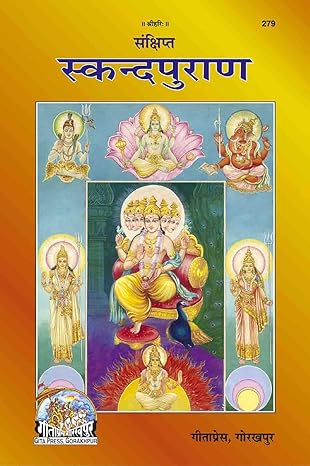
Introduction
The Utkal Khanda, also called Purushottama Kshetra Mahatmya, is one of the most important sections connected with Sri Jagannath, Puri, Nilachala, and the sacred geography of Odisha.
In this section, the Skanda Purana explains why Purushottama Kshetra is not treated as an ordinary pilgrimage place. It is described as the direct sacred field of Bhagavan Vishnu/Jagannath, where the Lord appears in a special wooden form, gives liberation through darshan, accepts devotion from all sincere devotees, and remains accessible in Kali Yuga.
The main flow of the Utkal Khanda is this:
First, the sages ask about the glory of Purushottama Kshetra. Then Jaimini explains the divine origin of the place. The section moves through the stories of Brahma, Markandeya, Yama, Pundarika, Ambarisha, King Indradyumna, Vidyapati, the Sabara devotee, Nilamadhava, Narada, Narasimha, the divine wooden forms of Jagannath, Balabhadra, Subhadra and Sudarshana, and finally the major rituals and festivals such as sea bathing, Indradyumna Sarovara snana, Snana Yatra, Rath Yatra, Gundicha Yatra, Chaturmasya, Parshva Parivartana, Utthapana, Dolotsava, and the method of Purana listening.
1. What is Purushottama Kshetra?
Purushottama Kshetra is described as the supreme sacred field where Bhagavan Vishnu, the Lord of Lakshmi, resides in a visible form for the welfare of beings.
The text says that this place is not merely a geographical region. It is treated as a divine body of the Lord himself. The Lord is present there as Jagannath, and therefore the field is called Purushottama Kshetra, the field of the Supreme Person.
It is described as:
situated near the ocean,
associated with Nilagiri / Nilachala,
sanctified by many tirthas,
connected with the Lord’s wooden manifestation,
a place where even darshan, remembrance, worship and residence become spiritually powerful,
a kshetra where liberation is made easier through devotion.
The text repeatedly presents Purushottama Kshetra as a place where the normal weight of karma becomes weakened by divine grace.
2. The Question of the Sages
The sages ask Jaimini to explain the glory of the field where Bhagavan Vishnu resides in a wooden form.
Their question is important because it sets the theme of the whole section:
Why is this place so sacred?
Why does the Lord appear there in a wooden form?
How can darshan alone become a path to liberation?
What are the tirthas, rituals and stories connected with this kshetra?
Jaimini replies that this is a deep and secret subject, but because the sages ask with faith, he explains it.
3. Brahma’s Concern and Vishnu’s Instruction
After creation, Brahma thinks deeply about the suffering of living beings. The world is filled with three kinds of suffering:
Adhyatmika tapa — suffering caused by one’s own body and mind.
Adhibhautika tapa — suffering caused by other beings.
Adhidaivika tapa — suffering caused by divine, cosmic or unseen forces.
Brahma wonders how beings trapped in this cycle can be freed. He worships Bhagavan Vishnu and asks for the path of liberation.
Bhagavan Vishnu then points Brahma toward Purushottama Kshetra. This means the kshetra is not introduced as only a pilgrimage spot, but as a divine answer to human suffering.
The message is clear:
People bound by karma, pain, birth, death and confusion can find refuge through the Lord’s presence in Purushottama Kshetra.
4. The Eternal Nature of the Kshetra
One of the strongest ideas in this section is that Purushottama Kshetra is not destroyed like ordinary places.
The text connects the kshetra with cosmic time. During dissolution, when the universe is covered with waters, the sacred field still remains spiritually significant. This idea is shown through the story of Markandeya Rishi.
5. Markandeya and the Akshaya Vata
During the cosmic dissolution, Markandeya wanders in the vast waters of destruction. Everything appears destroyed. He is exhausted and helpless.
Then he sees something astonishing:
A sacred place still exists, and within it stands the Akshaya Vata, the eternal banyan tree.
He also hears a divine voice calling him. He sees the Lord in a child-like form and experiences the mystery of Vishnu’s cosmic presence.
The meaning of this story is very deep:
The world may dissolve, but the Lord’s refuge remains.
Purushottama Kshetra is beyond ordinary destruction.
The Akshaya Vata represents spiritual permanence.
The devotee who takes shelter of the Lord crosses fear, death and helplessness.
For a blog, you can explain it like this:
In the Utkal Khanda, Markandeya’s vision teaches that Purushottama Kshetra is not only a holy place on earth, but a spiritual refuge that survives even when worldly supports disappear.
6. Yama’s Role and the Power of the Kshetra
Yama, the lord of death and justice, is also connected with this section.
The text explains that the glory of Purushottama Kshetra is so great that those who surrender to Bhagavan Jagannath and dwell in sincere devotion are not treated like ordinary karmic beings.
This does not mean that the text encourages careless living. Instead, it teaches that devotion, surrender, repentance and refuge in the Lord can transform a person.
The important point is:
Purushottama Kshetra is described as a place where the Lord’s grace becomes stronger than fear of death.
7. The Sacred Geography of Purushottama Kshetra
The Utkal Khanda describes the field using sacred geography. It does not speak only about one temple, but about a whole spiritual landscape.
Important elements include:
1. The Ocean
The sea near Puri is treated as sacred. Bathing in the sea is described as a purifying act when done with faith, prayer and discipline.
2. Nilachala / Nilagiri
The hill or sacred elevation associated with the Lord’s presence is central to the identity of Jagannath. The Lord’s presence on Nilachala becomes the heart of the kshetra.
3. Akshaya Vata / Kalpa Vata
The eternal banyan tree appears as a symbol of continuity, refuge and divine mystery.
4. Rohini Kunda
Rohini Kunda is connected with purification and sacred bathing.
5. Narasimha
Bhagavan Narasimha is worshipped as a powerful protector within the sacred field. Before the manifestation of Jagannath’s wooden form, Narasimha worship becomes important in King Indradyumna’s story.
6. Lakshmi, Vimala and other deities
The text shows that the kshetra is not isolated around only one form of the Lord. It contains a complete sacred universe of deities, tirthas and forms of worship.
8. Pundarika and Ambarisha
The Utkal Khanda tells the story of Pundarika and Ambarisha, who come to Purushottama Kshetra after recognizing the burden of sinful action and worldly bondage.
Their story is important because it shows the emotional side of pilgrimage.
They are not presented merely as perfect saints. They are troubled by their past, filled with regret, and searching for deliverance. When they come to the kshetra, worship the Lord and remain devoted there, they receive spiritual upliftment.
Blog meaning:
Purushottama Kshetra is not only for those who are already pure. It is also a place for those who sincerely repent, turn toward Bhagavan, and want to rebuild their life through devotion.
This is one of the strongest messages of the section.
9. Utkal Desha and King Indradyumna
The next major part introduces Utkal Desha, the land connected with present-day Odisha, as a spiritually beautiful and prosperous region.
The text then brings in King Indradyumna, a deeply religious and devoted king. He is described as righteous, disciplined, charitable, truthful and attached to Bhagavan Vishnu.
King Indradyumna hears about Purushottama Kshetra and the hidden form of Bhagavan known as Nilamadhava.
He becomes determined to see the Lord.
This begins the central narrative of Jagannath’s manifestation.
10. Vidyapati’s Journey
King Indradyumna sends a trusted person, Vidyapati, to search for the hidden Lord.
Vidyapati travels through difficult regions and reaches the forested area near Nilachala. There he meets a Sabara devotee, traditionally connected with the worship of Nilamadhava.
This meeting is very important because the Utkal Khanda brings together two streams:
Royal, Vedic, temple-based devotion represented by King Indradyumna.
Forest, tribal, intimate devotion represented by the Sabara devotee.
The Jagannath tradition becomes powerful because it does not erase either side. It joins them.
11. The Sabara Devotee and Nilamadhava
The Sabara devotee knows the hidden place of Nilamadhava. Vidyapati requests to see the Lord.
After great effort, Vidyapati gets the darshan of Nilamadhava. The form of the Lord is described as extremely beautiful, divine and jewel-like.
Vidyapati witnesses the sacredness of the place, performs circumambulation, and later returns to King Indradyumna to tell him everything.
This part establishes a key idea:
Before Jagannath appears openly to the world, he is worshipped secretly as Nilamadhava.
12. Nilamadhava’s Disappearance
When King Indradyumna finally prepares to go and see Nilamadhava, the Lord’s earlier form is no longer visible in the same way.
This creates sorrow and longing in the king.
But in the Purana, this disappearance is not a failure. It is preparation for a greater manifestation.
Nilamadhava’s hidden form gives way to Jagannath’s public form.
Meaning for blog:
The Lord first appears as hidden Nilamadhava, known only to a few. Later he appears as Jagannath, the Lord of the universe, accessible to countless devotees.
13. Narada’s Arrival
Narada Muni comes to King Indradyumna and guides him.
Narada explains the nature of devotion and the greatness of the Lord. He shows that the king’s longing is not ordinary desire; it is divine bhakti.
Narada becomes the spiritual guide who helps the king move from searching to establishing the Lord’s worship.
14. King Indradyumna at Ekamra Kshetra
The king also visits Ekamra Kshetra, associated with Bhubaneswar and Shiva worship.
This part is important because it shows harmony between Vishnu and Shiva traditions. The king worships Shiva, receives guidance, and continues toward the divine mission of establishing Bhagavan Jagannath.
This shows that the Purushottama Kshetra narrative does not reject other sacred forms. It includes them as part of a larger sacred geography.
15. Narasimha Worship
Before the final manifestation of Jagannath, Bhagavan Narasimha appears as a major protective and purifying presence.
Narada installs or worships Narasimha, and King Indradyumna offers hymns.
Narasimha represents:
protection,
removal of obstacles,
destruction of fear,
preparation of the sacred field,
divine strength before the Lord’s temple manifestation.
For blog clarity:
The Utkal Khanda places Narasimha before Jagannath’s manifestation to show that the kshetra is first protected, purified and spiritually prepared.
16. The Thousand Ashvamedha Yajnas
King Indradyumna performs great sacrifices, especially the sahasra Ashvamedha, or thousand horse sacrifices.
This is not just a display of royal power. In the Purana, the yajna represents the king’s complete dedication to Bhagavan.
After the sacrifices, divine events begin. The king’s devotion, Narada’s guidance and the Lord’s will come together.
17. The Divine Wooden Form Appears
After the completion of the yajna, the Lord’s instruction leads to the appearance of divine wood.
This is the beginning of the wooden form of Jagannath.
The text explains that the Lord himself chooses to appear in a wooden form for the sake of devotees. This is central to Jagannath theology.
Unlike many deities made of stone or metal, Jagannath’s form is daru-brahma — the divine present in sacred wood.
Blog explanation:
Jagannath’s wooden form is not treated as an ordinary image. In the Utkal Khanda, the wooden body is the Lord’s chosen form, created by divine will for the liberation and joy of devotees.
18. Vishvakarma and the Making of the Deities
The divine craftsman, Vishvakarma, is connected with the creation of the sacred forms.
The text describes a period of secrecy and divine crafting. The king must follow instructions carefully. The sacred forms are prepared according to divine command.
The four central forms are:
Sri Jagannath
Balabhadra / Balarama
Subhadra
Sudarshana
These four forms become the heart of worship at Purushottama Kshetra.
19. Brahma’s Role in Installation
Brahma comes for the consecration and praises the Lord.
The deities are worshipped, praised and established with divine procedure.
This is important because the text shows the installation not as a human event only, but as a cosmic event involving gods, sages, Brahma, Narada and the king.
The temple of Jagannath is therefore presented as a universal center, not merely a royal temple.
20. King Indradyumna’s Service
After the Lord is established, King Indradyumna does not claim ownership.
Instead, he offers service.
This is a powerful teaching:
Even the king is only a servant before Jagannath.
The Lord is not the property of the king. The king becomes an instrument for establishing worship.
For blog:
Indradyumna’s greatness lies not in building a temple, but in surrendering the temple to the Lord.
21. Sea Bathing Ritual
The Utkal Khanda gives special importance to bathing in the sea near Purushottama Kshetra.
The bathing is not described as a casual dip. It has a devotional method:
approach with faith,
remember the Lord,
offer prayer to the ocean,
enter with purity,
perform mantra/japa,
wear clean clothes afterward,
worship Bhagavan,
offer flowers, sandal, tulsi, lamps and food,
avoid careless or disrespectful behavior.
The sea is treated as a purifier because it is connected with the Lord’s sacred field.
22. Indradyumna Sarovara and Narasimha Darshan
The text also describes bathing in Indradyumna Sarovara, followed by worship of Narasimha.
This shows the pilgrimage sequence:
Purification through bathing.
Worship of Narasimha.
Worship of Jagannath and the divine forms.
Offerings, mantra, circumambulation and charity.
This creates a complete devotional journey.
23. Snana Yatra
The section describes the Lord’s ceremonial bathing, especially connected with the Jyeshtha Snana.
This is the sacred bathing festival of the Lord.
The meaning is not that the Lord needs purification. Rather, devotees receive purification by witnessing and serving the Lord’s ceremonial bath.
The festival expresses intimacy:
The Lord is treated as present, living and personally served.
24. Rath Yatra and Gundicha Mahotsava
One of the major highlights of the Utkal Khanda is the description of Sri Jagannath’s Rath Yatra.
The Rath Yatra is described as a great public festival where the Lord comes out for the people.
The forms of Jagannath, Balabhadra and Subhadra are placed on chariots and taken toward the Gundicha temple.
The text emphasizes:
preparation of chariots,
worship before the journey,
music, lamps, flowers and offerings,
chanting of the Lord’s names,
the joy of devotees,
the merit of seeing the Lord on the chariot,
the return journey and re-entry into the temple.
Blog meaning:
Rath Yatra is the moment when the Lord of the temple becomes the Lord of the road, the Lord of the people and the Lord of the universe.
25. Gundicha Yatra
The journey to Gundicha is not only a procession. It is a sacred movement of the Lord.
The Lord leaves the main temple and resides temporarily at Gundicha. Devotees worship him there, sing, dance, offer food and celebrate.
The return journey is also significant. The Lord’s movement outward and return inward symbolizes divine compassion and reunion.
26. Chaturmasya in Purushottama Kshetra
The Utkal Khanda praises staying in Purushottama Kshetra during Chaturmasya, the four sacred months.
A person who stays there with discipline, worships Bhagavan, listens to sacred stories, eats with restraint and serves devotees receives great merit.
The text connects Chaturmasya with deep devotional practice, not just external residence.
Important practices include:
daily worship,
hearing sacred texts,
offering food,
honoring prasada,
charity,
self-control,
remembering Bhagavan Vishnu/Jagannath.
27. King Shveta and the Glory of Prasada
The story of King Shveta is used to explain the greatness of Bhagavan’s prasada.
The Lord’s food is not treated as ordinary food. It becomes spiritually powerful because it is connected with Bhagavan’s acceptance.
The text strongly praises the prasada of Jagannath and warns against disrespecting it.
The idea is:
Prasada carries divine grace.
Prasada should be honored with faith.
One should not judge it with ordinary ideas of purity and impurity.
It removes sin and blesses the devotee.
For a blog:
In Jagannath tradition, Mahaprasada is not merely blessed food. It is treated as the Lord’s grace made edible.
28. Parshva Parivartana, Utthapana and Pravarana
The section describes festivals connected with the Lord’s cosmic rest and awakening.
These include:
Parshva Parivartana
The symbolic turning of the Lord’s side during the divine resting period.
Utthapana
The awakening or rising of the Lord after the resting period.
Pravarana
The covering or seasonal worship connected with divine care.
These rituals show that the deity is not treated as an object. The Lord is served like a living divine presence.
29. Dolotsava
The Utkal Khanda also describes Dola / Dolotsava, where the Lord is placed on a swing and worshipped with joy.
This festival expresses the sweet, playful and intimate side of devotion.
The Lord is adorned, worshipped, sung to and placed on the swing. Devotees celebrate through music, offerings and remembrance.
30. Worship of Different Forms of Bhagavan
The text also explains that Bhagavan can be worshipped in many forms and manifestations.
This section includes the idea that different divine forms, powers and manifestations are ultimately connected with the same supreme reality.
The devotee may approach Bhagavan through different names and forms, but the inner aim is surrender, devotion and realization.
31. Daksha’s Worship and Boon
The Utkal Khanda includes the worship of Bhagavan by Daksha and the receiving of blessings.
This section teaches that even powerful beings require humility before Bhagavan. Worship is not only for ordinary people; even gods, kings and ancient beings depend on divine grace.
32. Indradyumna Goes to Brahmaloka
At the end of the narrative, King Indradyumna’s earthly mission is fulfilled.
He establishes the worship of Bhagavan Jagannath and receives divine blessing. Then he moves toward Brahmaloka.
This ending shows that the king’s real achievement was not political power, but spiritual service.
33. Method of Listening to the Purana
The Utkal Khanda ends with instructions on hearing the Purana.
The text praises listening to sacred narration with faith and purity. The listener should not hear casually or disrespectfully.
The person should:
be clean in body and mind,
wear pure clothes,
sit with humility,
listen with attention,
avoid gossip and distraction,
honor the speaker,
worship Bhagavan,
give dakshina or gifts according to capacity,
feed or support worthy people,
complete the listening with devotion.
The text says that hearing this Purana with devotion gives spiritual merit and helps in attaining the Lord’s grace.
Prerequisites for a Person Visiting or Practicing This Kshetra
If you are writing this as a blog, this section is very useful.
The Utkal Khanda does not present pilgrimage as tourism. It expects a certain inner state.
1. Faith
The person should come with shraddha, not with mockery or pride.
2. Cleanliness
Bathing, clean clothes and purity of conduct are repeatedly emphasized.
3. Repentance
If the person has done wrong, the text does not reject them. But they must come with regret and a desire to change.
4. Devotion to Bhagavan
The central qualification is bhakti toward Vishnu/Jagannath.
5. Respect for Prasada
The person should honor Jagannath’s prasada as sacred.
6. Respect for Tirthas
The sea, tanks, trees, deities and sacred spaces should not be treated casually.
7. Charity and Service
Donation, feeding, helping devotees and supporting worship are encouraged.
8. Control of Mind and Senses
The person should avoid anger, greed, ego, intoxication, cruelty and disrespectful behavior.
9. Listening to Sacred Stories
Hearing the Purana, Bhagavata and the Lord’s stories is treated as part of the pilgrimage.
10. Do Not Use the Kshetra as a License for Sin
The text says that even sinners can be uplifted, but this does not mean one should knowingly commit sin and depend on pilgrimage later. The correct attitude is transformation.
Main Characters in the Utkal Khanda
Bhagavan Vishnu / Jagannath
The supreme Lord who appears in wooden form for devotees.
Brahma
The creator who seeks the path of liberation for beings and receives guidance from Vishnu.
Markandeya
The sage who witnesses the eternal nature of the kshetra during cosmic dissolution.
Yama
The lord of death, whose role shows the liberating power of the kshetra.
Pundarika and Ambarisha
Seekers who come with repentance and receive upliftment through devotion.
King Indradyumna
The king chosen to establish Jagannath worship publicly.
Vidyapati
The messenger who discovers the hidden worship of Nilamadhava.
Sabara Devotee
The forest devotee connected with Nilamadhava’s secret worship.
Narada
The divine sage and guide who directs Indradyumna.
Narasimha
The protective form of the Lord who sanctifies the kshetra before Jagannath’s manifestation.
Vishvakarma
The divine craftsman connected with the making of the wooden forms.
Important Places Mentioned
Purushottama Kshetra
Nilachala / Nilagiri
Utkal Desha
Sea near the kshetra
Akshaya Vata / Kalpa Vata
Rohini Kunda
Indradyumna Sarovara
Narasimha shrine
Gundicha temple
Ekamra Kshetra
The main temple of Jagannath
Important Festivals and Rituals
Sea Bathing
Purification through sacred bath near the Lord’s kshetra.
Indradyumna Sarovara Bath
Bath followed by Narasimha worship and Jagannath darshan.
Snana Yatra
Ceremonial bathing of the Lord.
Rath Yatra
The public chariot journey of Jagannath, Balabhadra and Subhadra.
Gundicha Mahotsava
The Lord’s journey and temporary stay at Gundicha.
Return Journey
The Lord’s return to the main temple.
Chaturmasya
Four-month devotional observance in the kshetra.
Parshva Parivartana
The Lord’s symbolic turning during rest.
Utthapana
The Lord’s awakening.
Dolotsava
The swing festival of the Lord.
Prasada Seva
Honoring Jagannath’s prasada with reverence.
Core Spiritual Messages of Utkal Khanda
1. Bhagavan becomes accessible
Jagannath appears in wooden form so that people can see, worship and love him.
2. The Lord accepts all sincere devotees
The Sabara devotee, Vidyapati, Indradyumna, sages and kings all become part of the same divine story.
3. Repentance matters
Even those burdened by wrong actions can be transformed if they turn sincerely toward Bhagavan.
4. Sacred geography is spiritual practice
The sea, tanks, trees, shrines and temple are all parts of one sacred body.
5. Prasada is divine grace
Food offered to Jagannath becomes a means of blessing.
6. Festivals are theology in action
Rath Yatra, Snana Yatra and Dolotsava are not only cultural events. They express how the Lord lives with devotees.
7. The king is also a servant
Indradyumna’s greatness lies in service, not ownership.
8. Purana listening is itself worship
Hearing this sacred story with devotion is treated as spiritually powerful.
Blog Conclusion
The Utkal Khanda of the Skanda Purana presents Puri not merely as a temple town, but as Purushottama Kshetra, the living field of Bhagavan Jagannath.
Its story begins with cosmic suffering and Brahma’s search for liberation. It moves through Markandeya’s vision of the eternal Akshaya Vata, the hidden worship of Nilamadhava, the devotion of the Sabara, the longing of King Indradyumna, the guidance of Narada, the installation of Narasimha, the appearance of divine wood, and finally the establishment of Jagannath, Balabhadra, Subhadra and Sudarshana.
The section teaches that Bhagavan does not remain distant. He comes close. He accepts wood as his body, food as his grace, a chariot as his movement, the ocean as his purifier, the devotee’s song as his worship, and the heart of the sincere person as his real temple.
For a devotee, the Utkal Khanda is not only a mythological account. It is a spiritual map: come with humility, purify yourself, honor prasada, remember Jagannath, serve others, listen to sacred stories, and let the Lord transform your life.