
1. Introduction & Welcome [00:00]
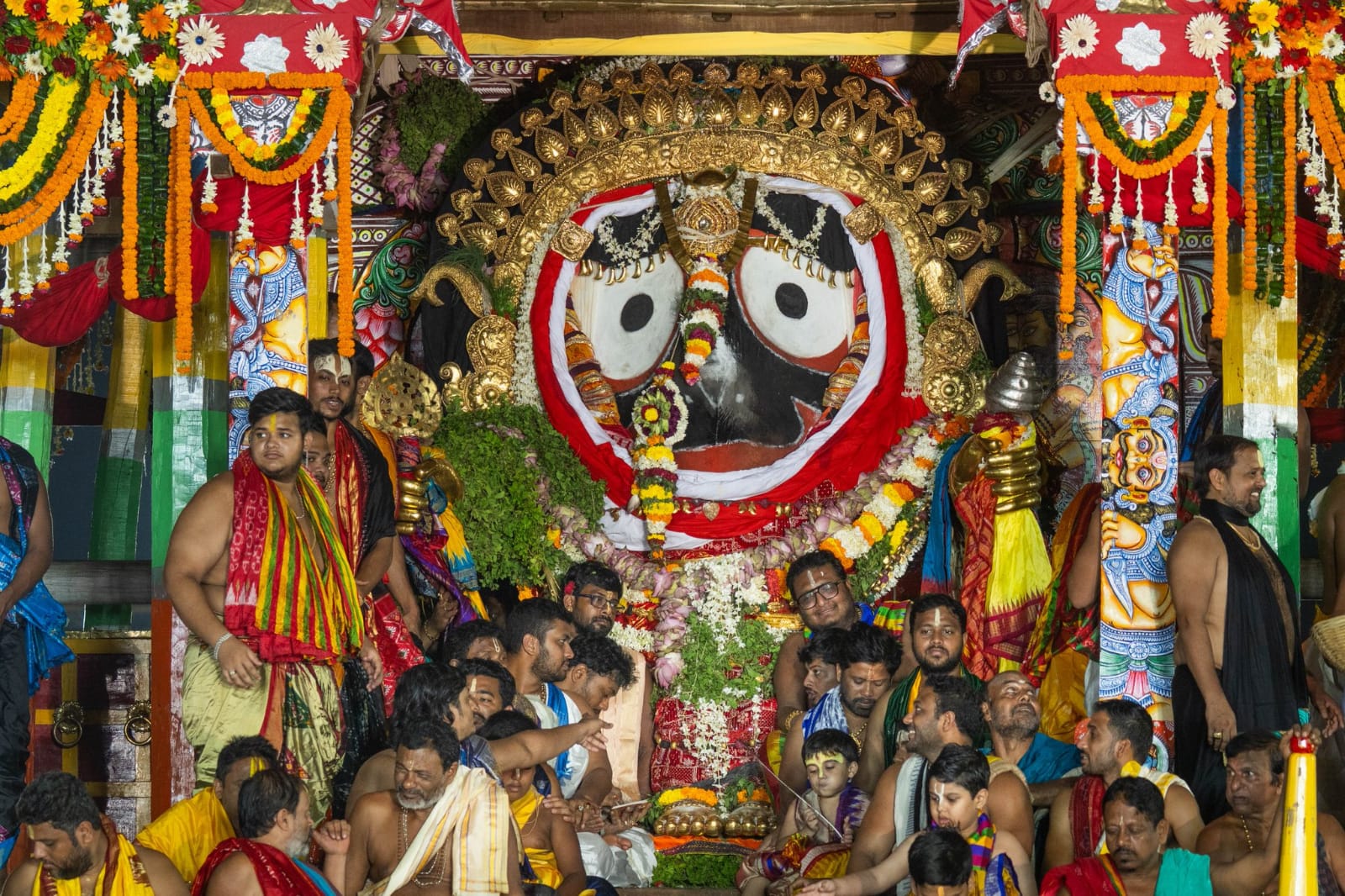
Introductory Note: Jai Sri Jagannath! Jagannath, the Lord of the Universe, spreads His rich tradition and culture worldwide through His devotees.
"Om Arupama Swarupama Ananta Purushottamama Avyaktam Vishwarupaya Jagannathaya Te Namah. Jai Jagannath!"
Organizations like Sri Jagannath Chintan & Chetana Worldwide (SJCCWW) and Sri Jagannath Consciousness organized an interactive webinar.
Chief Guest: Param Pujya Mahanayaka Guru Sri Ramachandra Bada Panda Samanta, the Mukhya Pujaka (Chief Priest) of Sri Mandira, was invited to share insights about the traditions, culture, and Ratha Yatra.
2. Role and Responsibilities of Bada Panda [01:13]
Greetings & Blessings: Bada Panda expresses immense joy seeing devotees across the globe engaged in Mahaprabhu’s service (seva) and offers his blessings.
Who is Bada Panda?
Among the servitors (sevakas), there are four primary lead positions. Bada Panda serves as the Chief Pujaka and direct representative (Jagannatha-Pratinidhi) of Mahaprabhu.
When letters/invitations arrive for Mahaprabhu, it is the Bada Panda who reads them and fulfills representative duties on behalf of the Deity.
While Puja Pandas conduct ritual worship, Bada Panda acts as the primary priest/purohita of the entire Purushottama Kshetra (Puri).
3. Concept of Mandira, Dhama, and Ratha [04:12]
Mandira vs. Dhama:
Mandira: A place built with stones where Devas are worshiped.
Dhama: A sacred realm infused with divine gems and Brahma-Svarupa energy, directly associated with Supreme Consciousness.
Vedic Roots of Ratha (Chariot):
The concept of Ratha is rooted in Vedic literature and scriptures like the Katha Upanishad:
Atma (Soul) = Rathi (Occupant/Passenger)
Buddhi (Intellect) = Sarathi (Charioteer)
Mana (Mind) = Ranju (Reins)
Indriya (Senses) = Horses
In the Vedas (Rigveda), the Sun God (Surya Dev) drives a golden chariot drawn by seven horses, removing darkness and energizing all living beings.
4. Timeline and Wood Collection for Ratha Construction [07:25]
Magha Saptami / Sri Panchami (Saraswati Puja): [07:58]
The initial preparation for Ratha Yatra begins on Magha Shukla Panchami (Sri Panchami).
Wood pieces (Ratha Katha) are brought and consecrated (Shodhana, Majjana, Panchamrita Puja).
Wood Requirements: [08:44]
Logs of specific wood species are harvested from dedicated forests, including Asana (364 logs) and Phasi (72 logs), totaling 1,875 pieces of timber. Trees are cut following strict scriptural rituals and reverence for nature.
Akshaya Tritiya: [10:00]
The actual construction of the three chariots (Ratha Gadhana) begins on Akshaya Tritiya with the ceremonial fitting of the wheels (Akha).
5. Gupta Gundicha & Ashokashtami Connection [10:27]
Chaitra Shukla Ashtami (Ashokashtami): [11:40]
A lesser-known observance called Gupta Gundicha occurs in the month of Chaitra.
Small representative idols (Durgamadhaba) perform secret rituals (Gupta Gundicha).
This day aligns with Ashokashtami, when Lord Lingaraj’s chariot (Rukamuna Ratha) rolls in Bhubaneswar. On this day, Mahaprabhu is offered Ashoka flowers, believed to remove sorrows (Ashoka).
6. Devotee Interaction & Question on Pahandi [18:44]
Question from Ghana, Africa: Devotee Saroj Kumar Pattnaik mentions building a Jagannath Temple in Ghana and asks about the rituals of Pahandi Bije and who is eligible to perform it. [19:12]
Explanation by Bada Panda: [19:56]
Daitapatis (descendants of Lalita and Vidyapati) primarily conduct the Pahandi procession along with support from other servitors (Servakass).
Snana Yatra & Snana Bedi: Prior to Ratha Yatra, on Snana Purnima, the Deities proceed in Pahandi to the Snana Mandapa for the divine bath (108 Pot Bath / Snana).
The rituals during Snana and Pahandi are recorded in ancient Agama, Nigama, and Tantra scriptures (such as Padma Purana).
7. Order of Pahandi and Chariot Boarding [23:08]
During Pahandi Bije on Ashadha Tritiya/Dwitiya, the Deities board their respective chariots in a specific sequence:
Sudarshana: Processed first and placed on Darpadalana (Subhadra’s Chariot). [23:17]
Balabhadra: Processed with great fervor to Taladhwaja. [23:55]
Subhadra: Lifted and carried in a special posture (representing Infinity / Srimurti) to Darpadalana. [24:08]
Jagannath: Processed with grand sway (Pahandi) to Nandighosha. [25:29]
Accompanying Deities such as Ramakrishna (small idols) also reside on the chariots.
8. Gundicha Yatra, Hera Panchami, and Bahuda Yatra [28:23]
Gundicha Mandira (Janma Bedi): [31:42]
The Deities travel to Gundicha Temple, considered their Janmasthana (birthplace / Mahavedi where King Indradyumna performed 1,000 Yagyanas). They stay there for 7 days (total 9-day Navadina Yatra).
Hera Panchami: [33:14]
On the 5th day (Panchami), Goddess Lakshmi gets upset that Mahaprabhu left Her behind at Sri Mandira. She visits Gundicha Temple in anger, breaks a piece of Mahaprabhu’s chariot wood (Ratha Katha), and returns via Hera Gohiri Sahi.
Bahuda Yatra (Return Journey): [36:53]
On Dashami, the Deities begin their return journey (Bahuda Yatra).
Mausima Mandira & Poda Pitha: On the way back, the chariots stop at Mausima Mandira (Ardhasani), where Mahaprabhu accepts Poda Pitha.
9. Suna Besha, Adhara Pana, and Niladri Bije [38:41]
Suna Besha (Golden Attire): [38:41]
Upon reaching Sri Mandira, the Deities are adorned with heavy gold ornaments on the chariots (Suna Besha / Raja Besha) for public view (Dakshinayana Darsana).
Adhara Pana: [41:26]
A special sweet milk drink (Adhara Pana) is offered in tall earthen pots on the chariots. The pots are broken so that guardian spirits, shashana devatas, and subtle entities residing around the chariots are satisfied.
Niladri Bije: [42:48]
The Deities return to the Ratna Singhasana inside the sanctum.
Goddess Lakshmi locks the temple door out of lingering anger. Mahaprabhu placates Her with Rasagolla and sweet words, leading to joyful reconciliation before returning to His throne.
10. Conclusion [45:30]
Bada Panda emphasizes that Jagannath culture represents universal love, human unity (Vasudhaiva Kutumbakam), and deep scriptural science.
Outro: The video concludes with a request to like, share, and subscribe to Ramachandra Panda Samanta Official and ends with the chant: "Jai Jagannath!"