
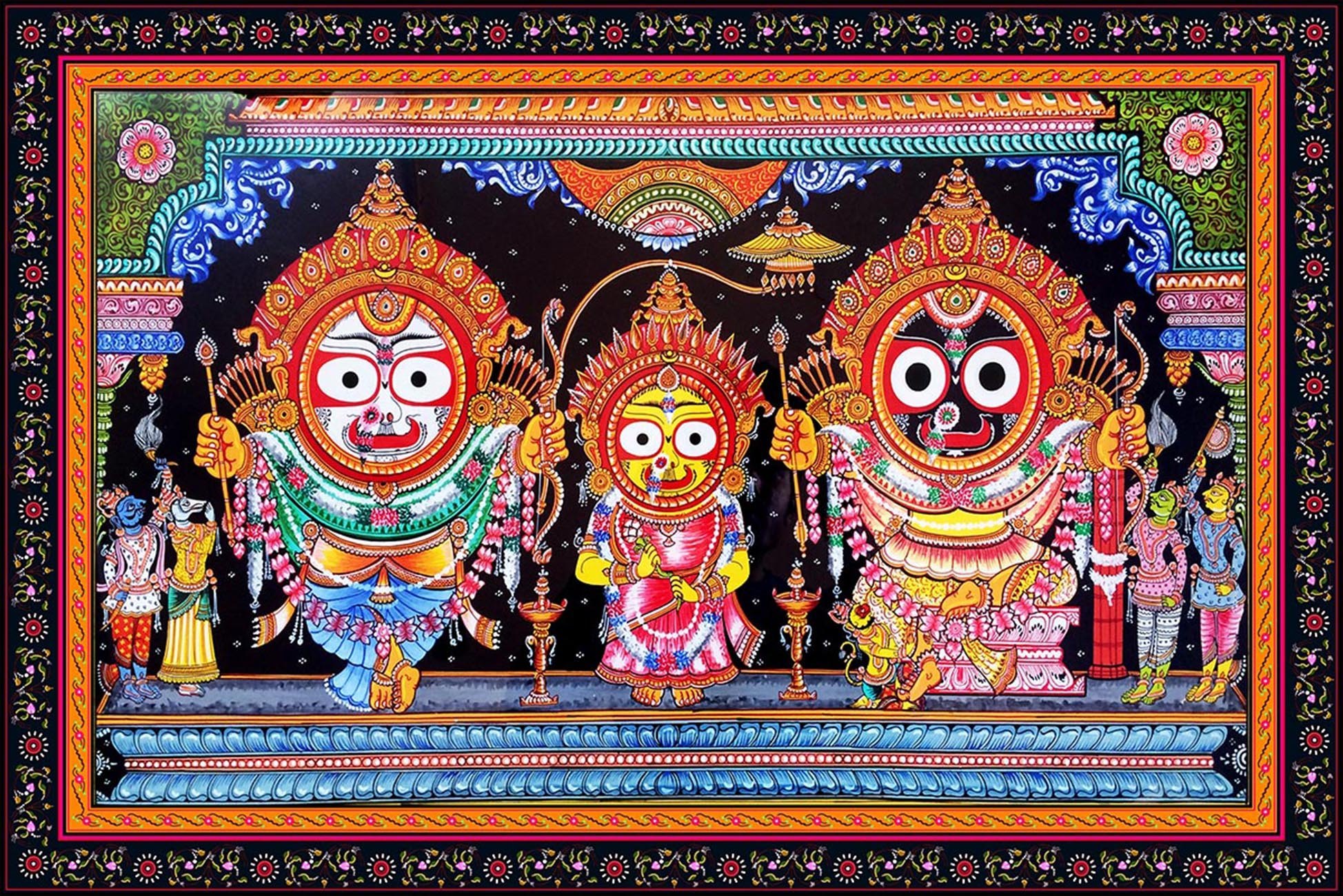
Jagannath Sanskruti is not just a religion or a set of rituals — it is the very heartbeat and Jibana Darshana (way of life) of Odisha. Every aspect of an Odia's life, from food to family events, revolves around the supreme Lord.
Here is a deep dive into the core
Here is a deep dive into the core of this rich culture, deeply rooted in the belief that God is treated as the head of the family.
The Humanization of the Divine (Manabikikarana)
In Jagannath Sanskruti, Mahaprabhu (the Supreme Lord) is not a distant, fearful deity. He is deeply humanized and treated as an intimate family member — affectionately called Kalia or Chaka-akhi (the one with round eyes).
His daily routine mirrors human life. He brushes His teeth, takes a bath, and wears different beautiful dresses (Besha) according to the time and season. When the scorching heat of summer arrives, Mahaprabhu takes a grand bath on Snana Purnima, catches a fever, and rests in the Anasara Ghara (sick room) for 15 days. During this time, He only consumes herbal medicines and simple fruits, just like we do when we are unwell.
He even shares the quintessential Odia love for
He even shares the quintessential Odia love for food. Before sleeping, He is offered Pakhala (watered rice), and He loves chewing Pana (betel leaf) prepared with camphor and cloves.
Kaibalya: The Great Equalizer
A cornerstone of this culture is the Mahaprasad (also known as Kaibalya or Abhada). Cooked in the grand kitchens of the Shree Mandira, the food is prepared in earthen pots called Kudua.
The most beautiful aspect of Kaibalya is that it completely obliterates caste and social hierarchies. Inside the temple premises (Ananda Bazar), a Brahmin and a person from a lower caste can sit together and eat from the exact same Kudua without any hesitation. In Odia society, sealing a friendship or fixing a marriage is often done by exchanging Mahaprasad — a bond known as Mahaprasad Nirbandha.
Bhakta and Bhagaban: A Bond of Pure LoveJagannath
Bhakta and Bhagaban: A Bond of Pure Love
Jagannath Sanskruti prioritizes pure devotion over strict Vedic rules. The Lord is deeply bound by the love of His Bhaktas (devotees).
A classic example is the story of Dasia Bauri, a weaver from a marginalized community. Because of his caste, he could not enter the Shree Mandira. Yet, when he offered a simple coconut from his village with pure devotion, Mahaprabhu extended His hands from the Ratna Singhasana (jeweled throne) to accept it directly. The culture teaches that Mahaprabhu hungers only for Bhaba (pure emotional devotion), not for wealthy offerings.
Ghosha Jatra: The Lord Comes to the Streets
While most deities remain inside their sanctums, Mahaprabhu leaves the Shree Mandira once a year during the Rath Yatra (Ghosha Jatra) to give Darshan to everyone, regardless of their religion, caste, or background.
The way He is brought out of the
The way He is brought out of the temple to the chariots is a spectacle of joy. It is called Pahandi Bije — a rhythmic, swaying movement where the Lord is pulled and pushed by His servitors, rocking back and forth like a majestic elephant. The streets fill with the sound of Ghanta, Kahal, and the chanting of "Jai Jagannath!"