
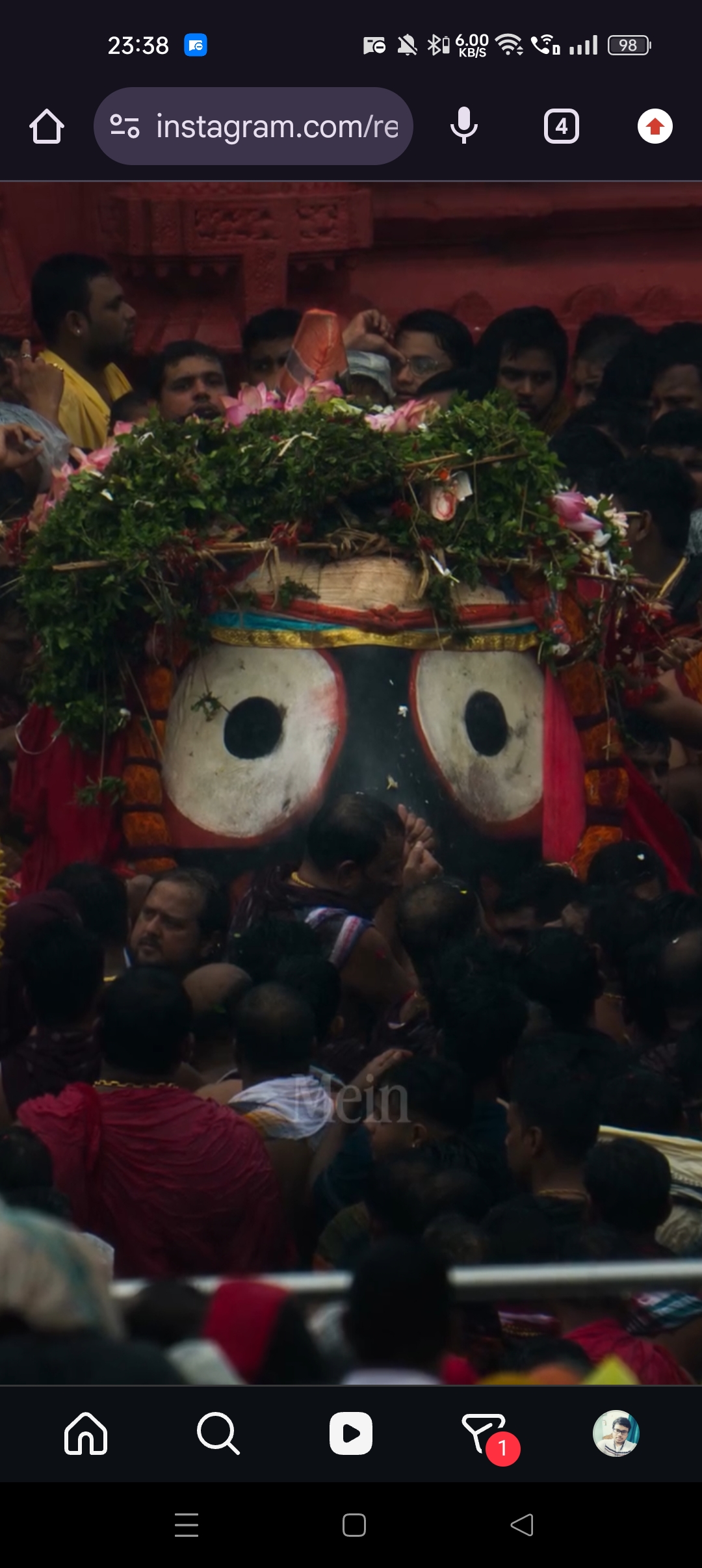
Bhagwat Geeta Class - 28
Explore the live video, audio discourse, and class schedules for this session.
Gita study notes
Combined explanation
Sat and Asat: Understanding the Eternal and the Temporary
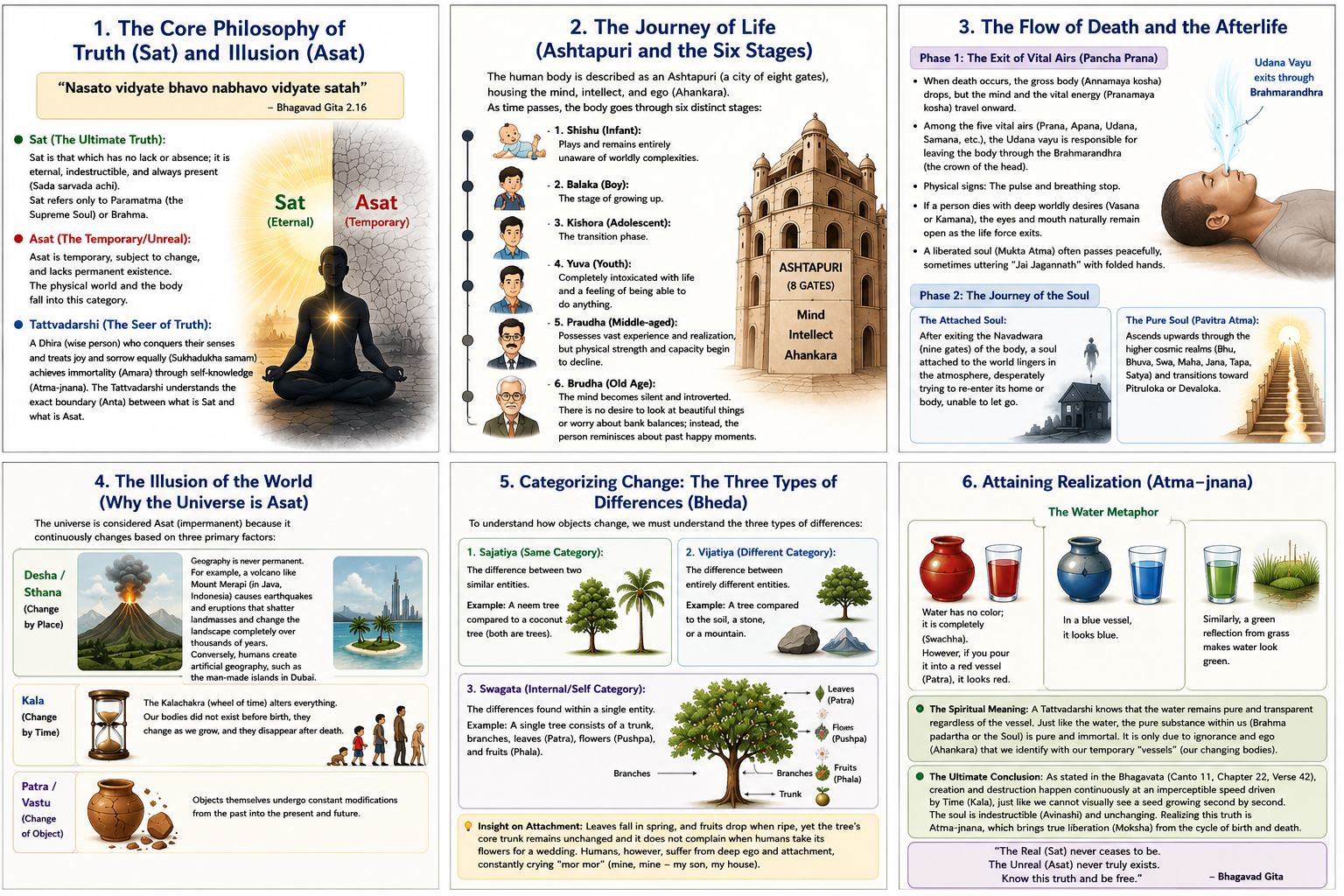
The Bhagavad Gita teaches us to understand the difference between Sat and Asat—the eternal truth and the temporary world.
The central teaching is expressed through the verse:
“Na sato vidyate bhavo,
Na bhavo vidyate satah.”
Sat means that which always exists. It has no beginning, no destruction and no absence. Asat refers to that which appears for some time, changes and eventually disappears.
The body, material objects and the visible world are Asat because they are temporary. The soul and the Supreme Being are Sat because they are eternal and indestructible.
How can a Person become Immortal ?
How Can a Person Become Immortal?
Every person who is born must die. Therefore, immortality does not mean that the physical body will continue forever.
A person becomes immortal through Atma-jnana, or knowledge of the Self.
The soul does not die. When a person understands, “I am not only this changing body; I am the immortal soul,” they realize their true nature.
This understanding comes to a Dhira—a calm and balanced person who has control over the senses. Such a person treats happiness and sorrow, cold and heat, gain and loss with an equal mind.
A Tattvadarshi is one who sees the truth clearly. Such a person understands the difference between:
Sat and Asat
Prakriti and Purusha
Kshara and Akshara
Sharira and Shariri
Nitya and Anitya
This understanding cannot come through scholarship or logical argument alone. It requires realization.
The Changing Stages of Human Life
The human body is described as an Ashtapuri, a city of eight gates. Within the body operate Mana, Buddhi, Ahankara and Chita—the mind, intellect, ego and consciousness.
The body passes through different stages:
Shishu, Balaka, Kishora, Yuva, Praudha and Brudha.
A child remains unaware of worldly concerns. During youth, a person may feel powerful and believe that anything is possible.
As age increases, experience also increases, but physical ability slowly decreases.
During old age, a person often becomes silent and Antarmukhi. Wealth, houses, bank balances and awards no longer hold the same attraction. The person begins to remember the meaningful and joyful moments of life.
At that time, the main thought may become: “How can I leave this body peacefully while remembering the Lord?”
The discourse gives the example of an elderly person who joined their hands with difficulty, said “Jai Jagannath,” and peacefully left the body.
.
What happens at Death ?
What Happens at Death?
At death, the gross body or Sthula Sharira is left behind. However, the subtle body and life force continue their journey.
The body contains the Pancha Prana, or five vital airs. Udana Vayu is connected with the upward departure of life energy. A yogi may leave the body through the Brahmarandhra, located at the crown of the head.
The life force may also leave through the Navadwara, the nine openings of the body.
A soul that remains strongly attached to family, home, wealth or personal possessions may stay near the physical world for some time. It may not immediately understand that the body has died.
As the layers of the subtle body gradually fall away, the soul moves toward higher states such as Bhu, Bhuva, Swa, Maha, Jana, Tapa and Satya. A purified soul may then move toward Pitruloka or Devaloka.
Why Is the World Called Asat?
The world is not called Asat because it does not exist at all. It is called Asat because it does not remain permanent.
It was not in its present form before. It exists in a particular form today, and it will change again in the future.
This change occurs through Sthana, Kala and Patra.
Sthana means change of place. Mountains rise, land breaks, islands become submerged and new land is created.
Kala means change through time. The body appears at birth, grows through childhood and youth, becomes old and disappears after death.
Patra or Vastu means change in objects. Every material object is created, modified and eventually destroyed.
Therefore, the visible world is always moving through change.
The Three Types of Bheda
The discourse explains three important forms of difference.
Sajatiya Bheda is the difference between objects of the same category. A mango tree, neem tree and coconut tree are all trees, but they are different from one another.
Vijatiya Bheda is the difference between objects belonging to different categories, such as a tree and a stone.
Swagata Bheda is the difference within one object. A tree contains a trunk, branches, leaves, flowers and fruits. They belong to one tree, but each part remains different.
Learning Detachment from a Tree
A tree gives flowers and fruits but does not use them for itself.
Its fruits feed people, animals and birds. Its flowers may be used for worship, decoration or celebrations.
When fruits become ripe, they fall. When leaves become old, the tree releases them and grows new leaves.
The tree does not complain, “This is my fruit” or “This is my flower.”
Human beings, however, remain deeply attached to ideas such as “my family,” “my house,” “my property” and “my lineage.”
The tree teaches us to give, accept change and release attachment.
The Water and Vessel Example
Water has no colour of its own.
When placed inside a red vessel, it appears red. In a blue vessel, it appears blue. The reflection of grass may make it appear green, while mud may make it appear brown.
However, the true nature of water remains unchanged.
In the same way, bodies, appearances, identities and circumstances are like different vessels. The soul within them remains pure.
A Tattvadarshi does not become confused by the vessel. Such a person recognizes the same pure and immortal essence within everyone.
The Final Understanding
Creation and destruction happen every moment, but the movement of time is so subtle that we cannot observe every change.
A seed breaks inside the soil, develops roots and produces leaves. We see the result, but we cannot watch every moment of its growth.
The same process of change continues within the body and the world.
The body changes. The world changes. Material objects change.
But the soul is Avinashi—indestructible.
The Supreme Soul, Brahma, Bhagawan or Ishwar is the eternal Sat.
Realizing this truth requires the blessings of God and Guru. It is not achieved through argument alone.
The essence of the teaching is simple:
The world is temporary.
The body is changing.
The soul is immortal.
The Supreme Being is the eternal truth.
Jai Jagannath.