
Part of Gita Class
Open Gita ClassBhagwat Gita - Class : 22
Explore the live video, audio discourse, and class schedules for this session.
Watch this video
Bhagwat Geeta - Class : 22
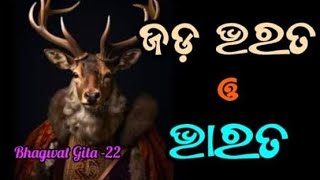
Section 1: Invocation and the Nature of the Soul (0:00 - 6:00)
The speaker begins with a Pranam (Salutation), chanting "Om Jagannathayate Namah" (Salutations to Lord Jagannath) and "Hari Om" (Name of the Lord).
He starts by discussing the Bhagavad Gita, specifically Chapter 2, Sloka (Verse) 12 and 13. He recites the verse:
"Dehino 'smin yatha dehe kaumaram yauvanam jara, tatha dehantara-praptir dhiras tatra na muhyati."
He explains the meaning in detail: Inside this Deha (Body) or Sharira (Body), there resides the Jivatma (Individual Soul) or Dehin (The embodied one). This physical body undergoes constant Paribartana (Changes), passing through various Abastha (Stages) of life: Kaumara or Balya abastha (Childhood), Yauvana (Youth), and Jara or Bruddha abastha (Old age). Just as the body continuously changes, similarly, the soul eventually attains Dehantara (Another body) at death. A Dhira purusha (Wise/Sober person) or Prajnabadi (Enlightened scholar) never gets Mohita (Bewildered/Confused) by these bodily changes. He emphasizes that the body is Drushyaman (Visible), but the soul inside is the Drasta (Observer/Seer), which remains untouched.
Section 2: The Three Bodies and Human Attachments (6:00 - 15:00)
The speaker explains that human beings experience life through three types of bodies:
Sthula Sharira (Gross physical body) – active during the Jagrata abastha (Waking state).
Sukshma Sharira (Subtle body) – active during the Swapna (Dream state).
Karana Sharira (Causal body) – active during Sushupti (Deep sleep state).
A Chhota Pila (Small child) naturally lives more in the Karana (Causal) state, carrying Purva janma smruti (Memories of past lives) and Sanskara (Past impressions). However, as they grow up, because of Sanga (Association/Company) with family and society, they forget these divine memories.
When people reach their Yauvana (Youth) or become Bruddha (Old), they get deeply attached to their physical flesh. Old people constantly worry about Khia (Food) and sleep, forgetting their spiritual identity. Great sages like Buddha (Gautam Buddha) and Adi Shankaracharya understood this trap; they took Sannyasa (Renunciation), left their Bastra (Clothes/Worldly ties), and sought the ultimate Satya (Truth) in Ekanta (Solitude). Ordinary people suffer from Pashu bhaba (Animalistic mindset) because they think, "Mu" (I) am this body.
Section 3: The Cycle of Rebirth and Remaining Detached (15:00 - 36:00)
He discusses the cycle of Srusti (Creation) and Binasha (Destruction). Even when a child is inside the Garbha (Womb), the Krama bikasha (Gradual progression) toward Mrutyu (Death) begins. A child might die at three months, five months, or immediately after Janma (Birth).
The soul travels through Chourashi laksha joni (8.4 million species/births) but inherently remains Swatantra (Independent) and Asanga (Detached). He gives an example of how a pure child plays with Ata (Dough). They creatively make a Kukura (Dog) or Machha (Fish) and then happily break it without attachment. However, society ruins this pure Swabhaba (Nature) by forcing worldly attachments onto them.
When we change bodies, our past actions are saved in Prakruti (Nature), functioning exactly like a digital Cloud Store (Cloud storage). He explains that the rituals of Shraddha (Death rites) and Tarpana (Water offerings) are done because the departed Bhuta/Preta (Spirits) are still attached to their Sukshma and Karana bodies and suffer from Bikara (Mental disturbances).
To escape this suffering, a person must live like a Hansa (Swan) in the Pani (Water). The swan swims in the water, but its feathers never get wet. Similarly, live in the Samsara (Material world) but do not let it corrupt your soul. You should live life like an Abhinaya (Actor in a play), fulfilling your duties but keeping your Lakshya (Target/Goal) focused entirely on Bhagaban (God).
Section 4: The Story of Jada Bharata and the Deer (36:00 - 50:00)
To perfectly illustrate this concept, he narrates the famous story from the Bhagavata Purana (Canto 5, Chapter 8) about Rajarshi Bharata (Saintly King Bharata).
King Bharata handed over his kingdom to his sons and retired to the banks of the Gandaki Nadi (Gandaki River) to perform strict Tapasya (Penance). One day, a pregnant Mruga (Deer) came to drink water. Suddenly hearing a loud Singha garjana (Lion's roar), she jumped across the river in terror. She gave birth to a baby mid-air and died immediately upon landing.
Feeling immense Daya (Compassion), Bharata rescued the Mruga sishu (Baby deer) and brought it to his Ashrama (Hermitage). Over time, he developed a deep Moha (Illusion/Attachment) towards the deer. He became so obsessed with its safety that he abandoned his Dhyana (Meditation) and Japa (Chanting). When his time of death arrived, his mind was completely fixed on the deer.
Because of his final thoughts, his next Janma (Birth) was as a Mruga (Deer). However, because of his immense past spiritual practices, this deer retained its Purva smruti (Memory of its past life). Knowing the dangers of attachment, the deer stayed near holy hermitages, ate only Sukhila patra (Dry leaves), and finally died meditating on Basudeba (Lord Krishna/Vasudeva).
Section 5: The Life of Jada Bharata - The Perfect Renunciate (50:00 - 1:02:00)
In his following Janma (Birth) (Canto 5, Chapter 9), he was born into an enlightened Brahmana (Brahmin) family. His father tried to teach him the Gayatri (Sacred Vedic mantra) and Karma kanda (Rituals), but Bharata intentionally acted like a Jada (Dull/Idiot) and a Pagala (Madman). He did this so that nobody would force worldly duties or attachments upon him.
After his parents passed away, his brothers treated him terribly. They made him guard their Bila (Farming fields) and fed him terrible, burnt Khada (Food). Bharata remained completely Nirvikara (Without reaction/Unperturbed). He ate whatever was given without a single complaint, finding Ananda (Bliss) only in the soul.
One night, a group of dacoits captured him to offer him as a Bali (Human sacrifice) to Goddess Bhadrakali. Bharata felt zero Bhaya (Fear). When the dacoit leader raised his Khadga (Sword) to chop his head off, the Goddess herself burst forth from the idol. She could not tolerate the harm of a pure Atmajñani (Knower of the Soul). She beheaded the dacoits with her own sword. Throughout all the bloodshed, Jada Bharata stood there perfectly peaceful, completely detached from whether his body lived or died.
Section 6: Teaching King Rahugana and Final Conclusion (1:02:00 - 1:22:19)
Moving to Chapter 10, Raja Rahugana (King Rahugana of Sindhu) was traveling in a palanquin. One of his bearers fell ill, so his men grabbed Jada Bharata and forced him to carry the palanquin.
Bharata walked very carefully to avoid stepping on small Jiba (Insects/Ants) on the ground, which caused the palanquin to shake violently. The King got angry and mocked him with Byanga (Sarcasm), saying, "Are you tired? You look very weak, like a Jibanta shava (Living corpse)."
Hearing this, Bharata finally spoke, delivering profound Jnana (Wisdom): "O Rajan (King), you speak the truth. The body can be Mota (Fat) or Patala (Thin), and it is ultimately a corpse. But the Atma (Soul) carrying it is untouched by any burden. You think you are a King and I am a servant, but these are just temporary bodily designations."
He told the King that his actual Gantabya sthala (Destination) should not be a physical place, but self-realization. Realizing he was speaking to a Brahmajñani (Knower of the Supreme Truth), King Rahugana jumped down and fell at Bharata's feet, begging for forgiveness and knowledge. Bharata explained how the Jivatma (Individual soul) powers the Anga (Organs/Limbs) like light illuminating a room, while the absolute Truth remains perfectly still.
The speaker concludes the video by stating that to achieve liberation, we must cultivate this level of Nissangata (Detachment). Even if your friends and family turn against you for walking the path of Bhagaban (God), you should never fear. A Dhira (Wise person) practices Mauna (Silence) and looks inward. He likens spiritual growth in the Gita to a student taking progressively harder exams—moving from Karma (Action) to Jnana (Wisdom), and finally graduating with Atmajñan (Self-realization).